The UWE TREvolution team has been exploring models of data governance with research groups across Latin America. Dr Elizabeth Green reflects on what we’ve learned so far.
Why international perspectives matter
When we talk about data governance in the UK we are often thinking about our own systems and processes. Within the UK we now have a network of Trusted Research Environments (TREs), output checking frameworks, training programmes, and governance principles such as the Five Safes are widely discussed and continuously refined. The environment has enabled innovation but it also carries a risk: that our conversations become inward-looking, shaped primarily by our own experiences.
Through TREvolution, we wanted to explore how these ideas resonate in different contexts. Not to “export” UK solutions, but to understand whether the underlying principles of secure, ethical data use hold across different legal systems, cultures, and resource environments.
Latin America provided a particularly valuable perspective. While TREs are less common in the region, they are far from absent. Mexico’s national statistics office, INEGI, established its TRE in 2013, becoming the first in the region. Since then, TRE-like facilities have emerged across statistical institutes, central banks, health ministries, and research organisations. However, compared to the UK, colleagues in Latin America have had fewer opportunities to share experience across institutions and countries.
Bringing researchers together
Together with my colleague Professor Felix Ritchie and our Spanish-speaking PhD student Pedro Ferrer Breda, we convened a three-day workshop in Mexico City, funded by TREvolution. We invited participants from across Latin America, and 27 attendees joined us from Mexico, Uruguay, Brazil, Costa Rica, and Chile.
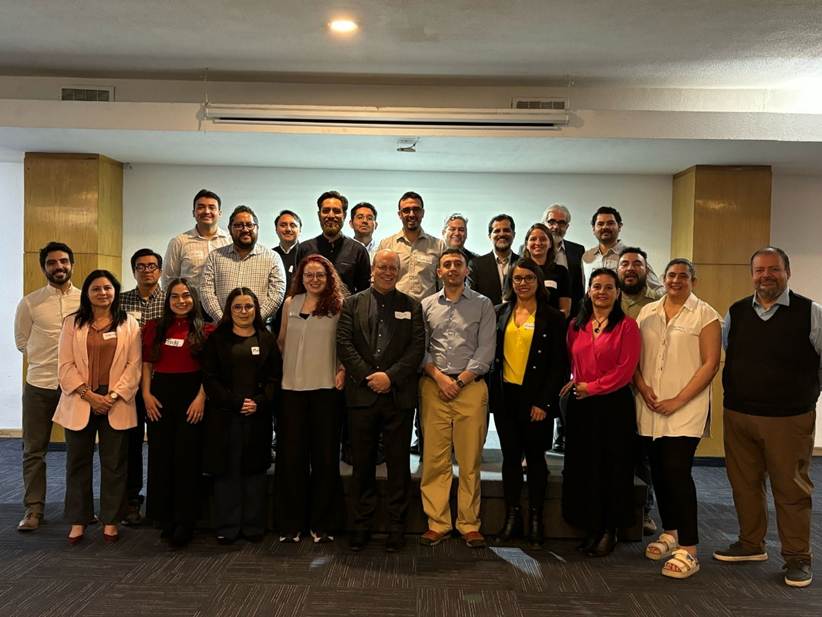
Participants represented a wide range of roles, including data owners, TRE managers, policymakers, and researchers. Our aim was not simply to present UK approaches, but to create a shared space for dialogue.
We explored TREvolution products SACRO and SATRE to understand if and how these products could be used, adapted and translated for a different context. We also explored core governance concepts familiar in the UK such as the Five Safes framework, researcher training, output checking, and process design but delivered these through interactive group exercises. This was partly practical (Felix and I do not speak Spanish), but also intentional. Group discussions allowed participants to interpret these ideas within their own institutional realities.
What emerged was not a simple transfer of knowledge, but a mutual exchange.
Shared principles, different priorities
One of the most striking insights was how universal many core data governance principles appear to be. Across countries with very different legal and political contexts, participants consistently emphasised similar priorities: protecting confidentiality, ensuring appropriate use, and maintaining public trust.
At the same time, there were important differences in emphasis.
In several Latin American contexts, there was a strong orientation toward enabling access for public benefit. Despite facing significant challenges including resource constraints and, in some cases, higher baseline risks the prevailing attitude was one of openness and possibility. The focus was often on how to enable safe access, rather than whether access should be enabled at all.
This contrasts with the UK, where governance discussions can sometimes be dominated by risk avoidance and defensive thinking. Engaging with colleagues who approached data governance with such clarity of purpose provided a valuable reminder: data governance exists not simply to prevent harm, but to enable meaningful and beneficial research.
Building a growing international community
Following the workshop, we established the Latin American Data Governance Group, which now meets monthly. This group provides a forum for sharing experiences, discussing challenges, and supporting emerging TRE initiatives across the region.
Several concrete outputs are already underway. We are conducting a survey to map TRE development across Latin America, helping to better understand the regional landscape. We are also launching a series of presentations from country representatives, sharing practical lessons from establishing and managing TREs.
These conversations are already shaping TREvolution’s work. There has been strong interest in SATRE (the Self-Assessment Tool for Research Environments), which helps organisations assess and strengthen their governance practices. We are currently developing a Spanish-language version to improve accessibility. Similarly, SACRO (Semi-Automated Checking of Research Outputs) is being tested with partners in Uruguay, supporting the development of locally appropriate output checking processes. While back in the UK we are busy developing tools, theories and approaches for our own culture and context it’s important for us to reflect how it might be used globally and what we can do to further support the global scientific community.
What this means for TREvolution
Engaging with colleagues in Latin America has reinforced something fundamental: while governance solutions must always be adapted to local contexts, the underlying principles of safe, ethical, and effective data use are remarkably consistent.
This international collaboration also helps us reflect critically on our own assumptions. It challenges us to think beyond national frameworks and consider governance as a global, collaborative endeavour, it provides us with critical reflections of how to adapt tools to reflect the culture, context and resource without compromising security, ethics or efficacy.
The UK has played an important role in advancing trusted research environments, but leadership in this space does not mean speaking alone it means creating space for shared development. Through TREvolution, we are working with international partners to ensure that governance tools such as SACRO and SATRE are shaped by real-world needs across diverse settings. This collaborative approach strengthens both the tools themselves and the global infrastructure that supports safe research. By working together, we can ensure that trusted data access is not limited to a small number of countries but becomes a shared global capability that supports scientific progress and public benefit.
Get involved
If you are interested in international collaboration on trusted research environments, or would like to learn more about TREvolution’s work, we would be delighted to hear from you. You can explore our tools, follow our updates, or get in touch with the team to join future discussions.
About TREvolution
TREvolution is a programme of work shaping the future of sensitive data research in the UK by promoting shared standards and building trustworthy innovations to make research faster and more effective for the public good. SACRO is one of the areas of focus for TREvolution to accelerate research and build trust.