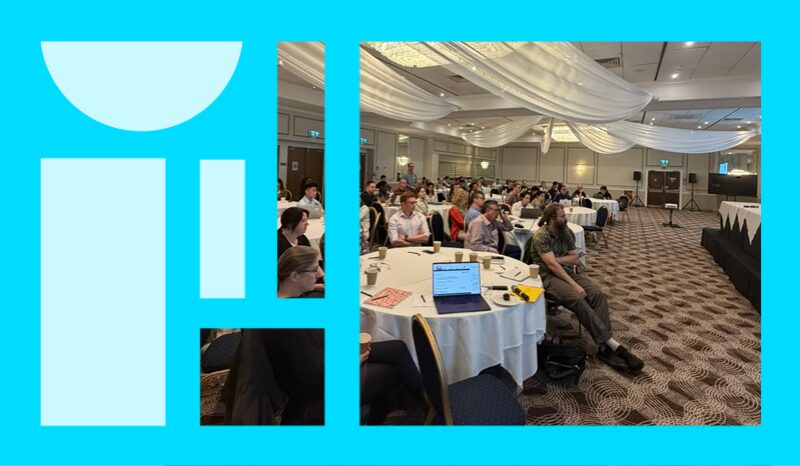
DARE UK recently awarded three project catalysts to explore next-generation capabilities for the use of free-text data within TREs. As part of a dedicated Workshop “Free-text healthcare data and TREs”, the three projects presented the needs and opportunities for the healthcare data research community when it comes to responsible handling of unstructured sensitive text.
The Workshop was organised as a pre-conference event of the 9th Healthcare Text Analytics conference HealTAC 2026, which took place in Brighton from 8th to 10th June 2026. The projects work with TREs to develop early-stage prototypes that test new ideas to support access and use of healthcare free-text data to advance research for public benefit. In this workshop, the projects reported on how the public have helped shape the work, and opportunities and challenges that have been encountered.
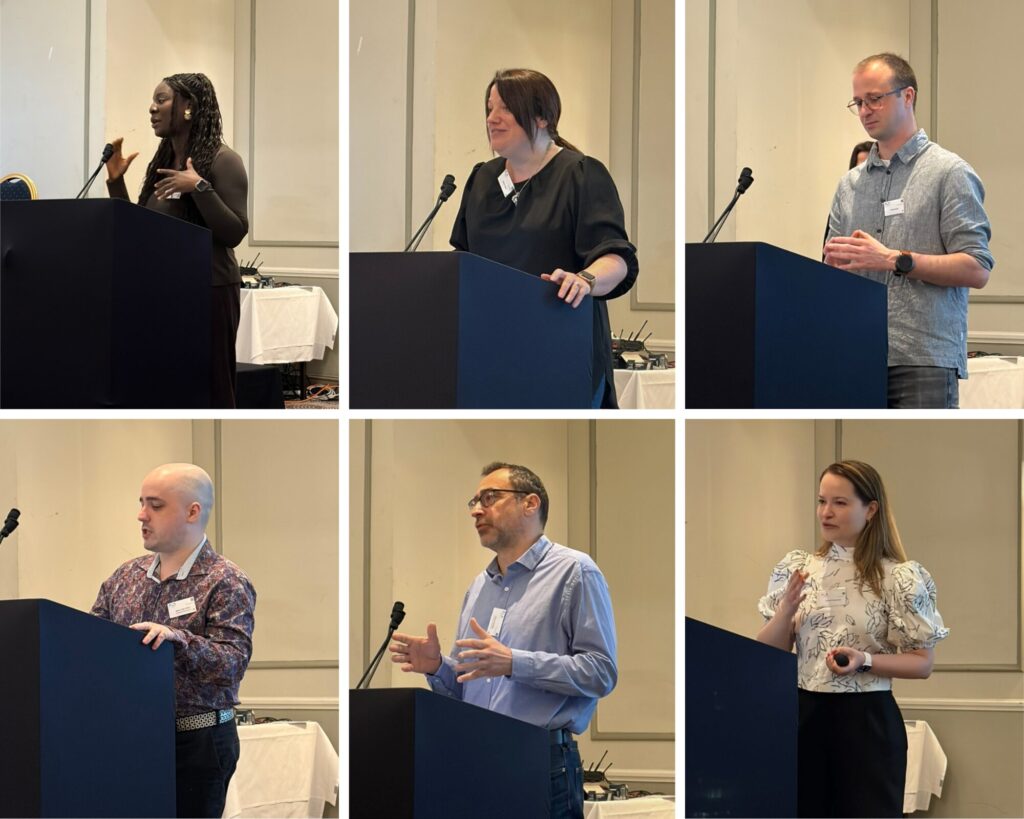
Chaired by Jaya Chaturvedi (from King’s College London), the workshop started with an introduction to DARE UK’s research portfolio explained by Michelle Amugi, DARE UK’s Programme Manager. Arlene Casey and Franz Gruber (from the University of Edinburgh) then presented STAR-TRE: Safe and Trustworthy Assessment of Risk in TREs for Sensitive Free-Text Access. They talked about developing scalable, language-model-enabled tools and transparent risk identification and assessment methods aiming to help researchers and data custodians understand when and how free-text can be used, and how to identify and manage risks.
Warren Del-Pinto and Goran Nenadic (from the University of Manchester) introduced FORTRESS-TeHR: Federated, Open and Reliable TREs for Synthetic Textual Healthcare Records. They discussed an alternative to using real-world data by exploring how synthetic clinical text can be generated, validated and deployed for safe use in TREs, and what the barriers and appropriate use cases might be. Finally, Grazziela Figueredo (from the University of Nottingham) presented TRExt: TRE Text Analytics, exploring approaches to enable TREs to convert sensitive unstructured text into structured, analysable formats suitable for federated analytics.
The workshop brought together over 80 attendees, including researchers, clinicians, industry representatives, members of the public, and TRE and information governance professionals. Following the presentation from the three DARE UK Next-Gen Catalysts, the Workshop then focused on collaboration opportunities, including the community-driven initiatives for responsible and safe access to text data as part of the DARE UK SAFETEXT Working Group.