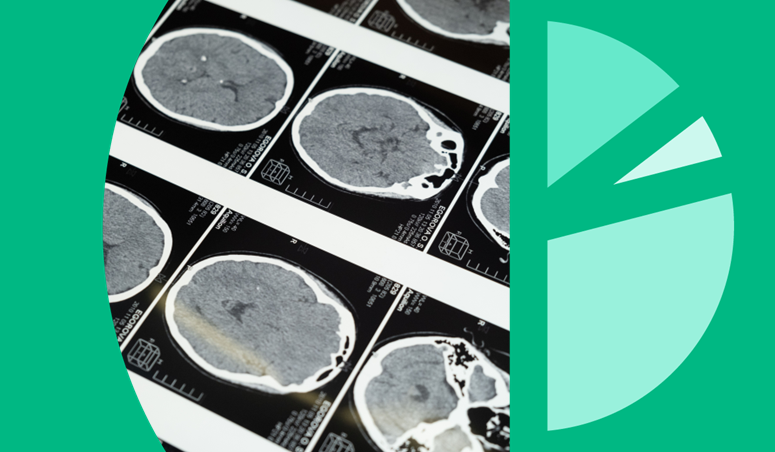
BRAID aims to make it easier for researchers to study brain health by using brain frailty (which are changes or damage to the brain caused by ageing and disease) as a case study.
It will test and help improve technology that enables secure analysis of brain-imaging and related health data across different trusted research environments (TREs), while protecting privacy and involving the public in shaping how these technologies are developed and used.
Current systems make it difficult to analyse data held by different organisations because of differences in data standards, access arrangements and technologies that do not always work well together. These barriers limit researchers’ ability to analyse brain health data across large populations.
BRAID (Brain Frailty Integrated through Data Federation) will make it possible to analyse brain health data securely across different organisations, enabling researchers to learn from more diverse populations while keeping sensitive data protected. This could improve our understanding of brain health, frailty, and in the longer term, support earlier identification of risks and more personalised healthcare.
BRAID is led by the University of Nottingham in partnership with Nottingham University Hospitals NHS Trust (NUH), Dementias Platform UK (DPUK), Swansea University, and the University of the West of England.
BRAID will test technology that allows researchers to send and run brain data analyses securely across different TREs without moving sensitive data between them. The team will identify what improvements are needed to support complex brain-imaging research and safely check results before they leave a secure environment. Members of the public will help the team understand people’s expectations and concerns about privacy, security and data use.
What BRAID aims to achieve
By the end of the project, the BRAID team aims to test and improve TREvolution so that complex brain-health research can be carried out securely and reliably. Their goals include:
- Developing secure analysis processes – Adapting and testing brain-imaging and data analysis processes to run securely across different TREs.
- Enabling federation – Identifying improvements to technology needed to run these analyses.
- Preserving privacy – Identifying how different research results need to be checked for privacy risks before they are released.
- Setting parameters for cross-TRE analysis – Defining the data, supporting information and technical requirements needed to make brain-imaging analyses possible across TREs.
- Embedding public voices in governance – Involve members of the public in discussions about privacy, data use and release of research results so that new developments reflect public values and expectations.
Progress so far
Within the first six months of delivery, the BRAID team has:
- Developed the first version of the technical design
- Purchased a new supercomputer for the NUH TRE, with installation and secure access arrangements underway.
- Gained access to an existing brain-imaging research dataset to help test the technology at the NUH and DPUK sites.
- Adapted and documented the brain-scan processing software so that it can run more consistently and flexibly in different TREs.
- Adapted and documented the brain-age estimation software for testing across TREs.
- Installed the technology needed to begin testing how analyses can be submitted and run securely.
- Identified improvements needed to support complex brain-imaging research, including how processed data is stored and reused.
- Started investigating differential privacy, a method that adds extra protection for people’s data, and how using it could affect brain-age estimates.
- Met with the SAIL Consumer Panel to gather public feedback on the project, including views on privacy, data use and the technologies being developed.
- Launched the BRAID project website.
During the final six months, the team will test the brain-imaging and brain-age analyses across different TREs, complete the NUH TRE computing infrastructure, test additional brain-imaging analysis and identify further improvements needed based on the results of technical and privacy testing. The team will continue working with members of the public and partner organisations, whose feedback will help shape BRAID’s final recommendations, guidance and proposed improvements to TREvolution.
Relevance to the DARE UK vision
BRAID supports TREvolution’s goals by testing its technology with complex brain-imaging and health-data analyses and identifying where it needs to be improved or adapted. The project will provide practical evidence and recommendations on computing needs, analysing data across TREs, data standards and safely checking research results, helping to make the technology more useful for other researchers and organisations in the future.
About the DARE UK Research Exemplars
The DARE UK Research Exemplars are short, impactful research projects demonstrating how emerging Trusted Research Environment (TRE) capabilities can support real-world sensitive data research across the UK. Working across multiple TREs and research domains, these projects bring together researchers, TRE operators, public contributors and other partners to apply and evaluate innovations developed through TREvolution. Their role is to test new approaches in live research settings, generating practical evidence on what works well, what challenges remain, and how sensitive data research can be strengthened for the public good.