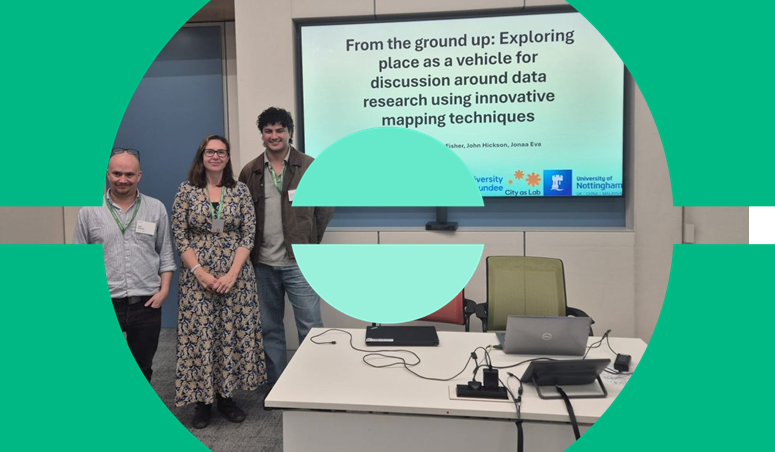
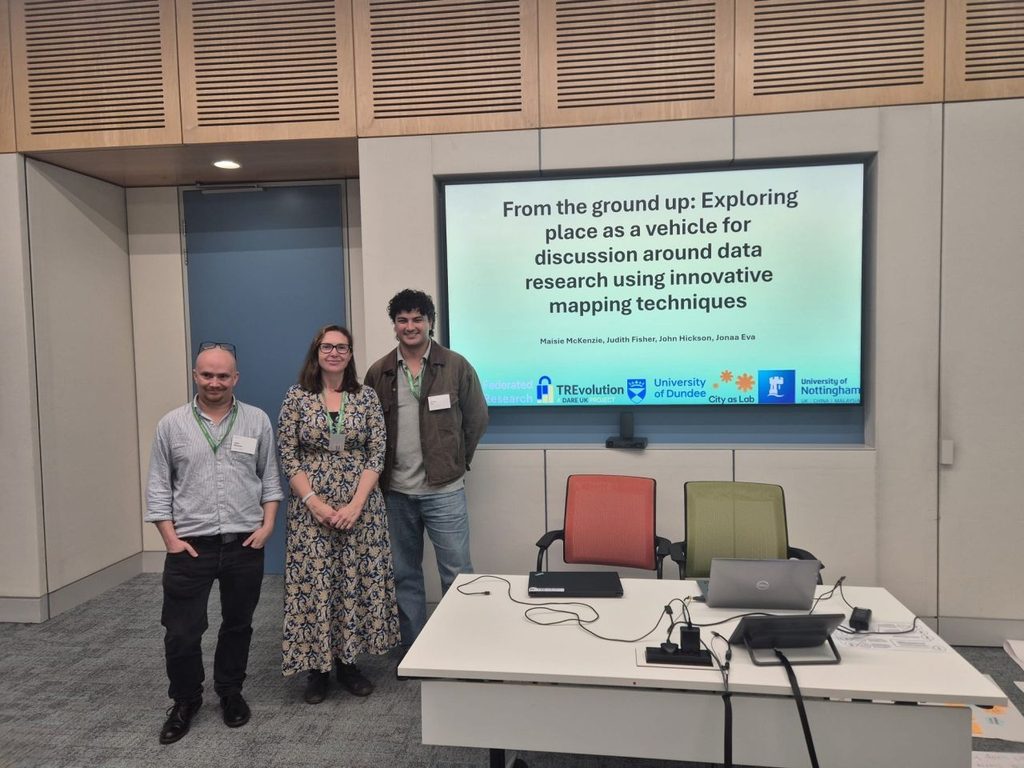
In this blog TREvolution’s Judith Fisher and Maisie McKenzie reflect with the Federated Research Community Group’s John Hickson and Jonaa Eva, on the successes of innovative mapping techniques to engage diverse audiences.
Public engagement in sensitive data research can take many forms, with success best found in creativity and connection. The TREvolution programme has taken an innovative approach in connecting with the public by engaging audiences through physical maps, projection and screen-based techniques. These techniques combined promote participation, contributions, and discussions by drawing focus to a shared space and place. Delivered with the City as Lab team as part of the Connect Nottingham participatory research hub, participants were able to see how data can be visualised, projected onto a 3D-printed map of a city and complex concepts broken down using their Projection Augmented Relief Model (PARM).
The journey so far
The TREvolution programme adopted the PARM approach for in-person workshops with voices of those not heard in earlier research. The workshops engaged with: young people not in education, employment or training (in partnership with the King’s Trust), older people (in partnership with the University of the Third Age) and people living in areas of multiple deprivation.
Utilising the PARM, the combining of animations and imagery enhanced participants’ experience and their sense of curiosity about data and how it is used. The combination of space, place, and visualisations allowed audiences to self-orient, improve understanding and connection during the sessions. These workshops surfaced common themes and emergent questions that were key insights that would inform the delivery of TREvolution.
With support from the Public Engagement in Data Research Initiative (PEDRI) Standards to Impact fund, TREvolution’s Public Advisory Group (PAG) utilised the insights from the workshops to:
- develop the new SATRE (Standardised Architecture for Trusted Research Environments) guidelines including strengthened public involvement, transparency and accountability;
- deliver new training materials for Artificial Intelligence output checking made more accessible; and
- establish the need for an online decision-making framework for Trusted Research Environments.
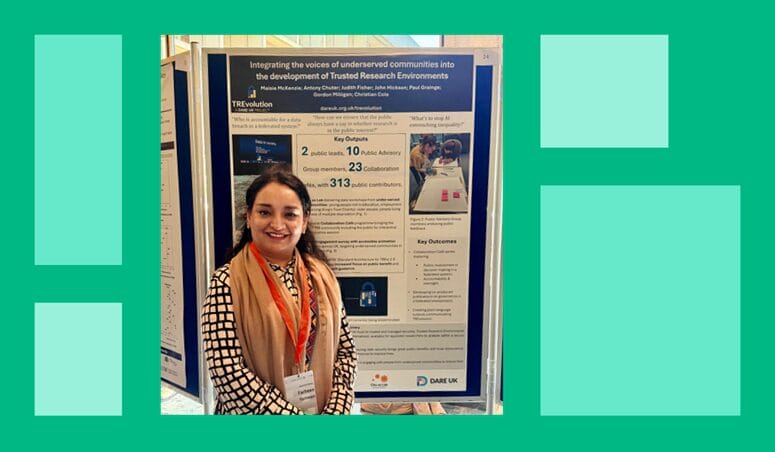
External engagement themes were also informed by the workshops (see Figure 2), with 16 online Collaboration Cafes held over the course of the project, mixing public contributors, technical staff and academics to address questions prioritised by the public. The PAG has been key in disseminating this work, developing an accessible animation based on the workshop themes, producing 5 blogs, authoring 4 conference posters and giving oral presentations at 2 online workshops and 2 in-person conferences.
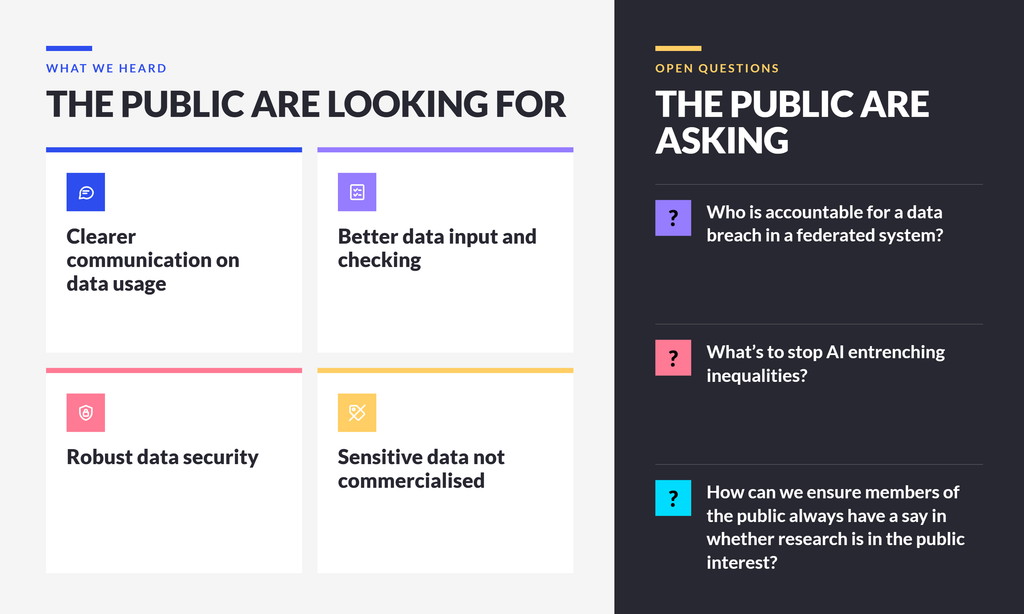
The success of these workshops led the Federated Research Community Group to adopt this approach to engage public and professional audiences. Building on the TREvolution workshops, the Federated Research Voices Pilot provides participants with the necessary information to understand the value of federation in research. These sessions aim to support contributors to become advocates for federated research within their communities.
Nearing the destination
Whether you are a member of the public, a researcher, or somewhere in between, your voice has a place in this research. Connect Nottingham and City as Lab continues to design innovative approaches as the University of Nottingham’s newest participatory research hub. The Federated Research Community Group are extending this methodology and are seeking input from the community to help shape how federated research is communicated. With the TREvolution PAG continuing to champion this work, opportunities to get involved through the Collaboration Cafes and future workshops remain open.
Reach out and join the conversation by contacting:
- Judith Fisher (JFisher002@dundee.ac.uk) on TREvolution
- City as Lab (cityaslab@nottingham.ac.uk) on Connect Nottingham initiatives
- Jonaa Eva (Jonaa.Eva@nottingham.ac.uk) on the Federated Research Community Group